


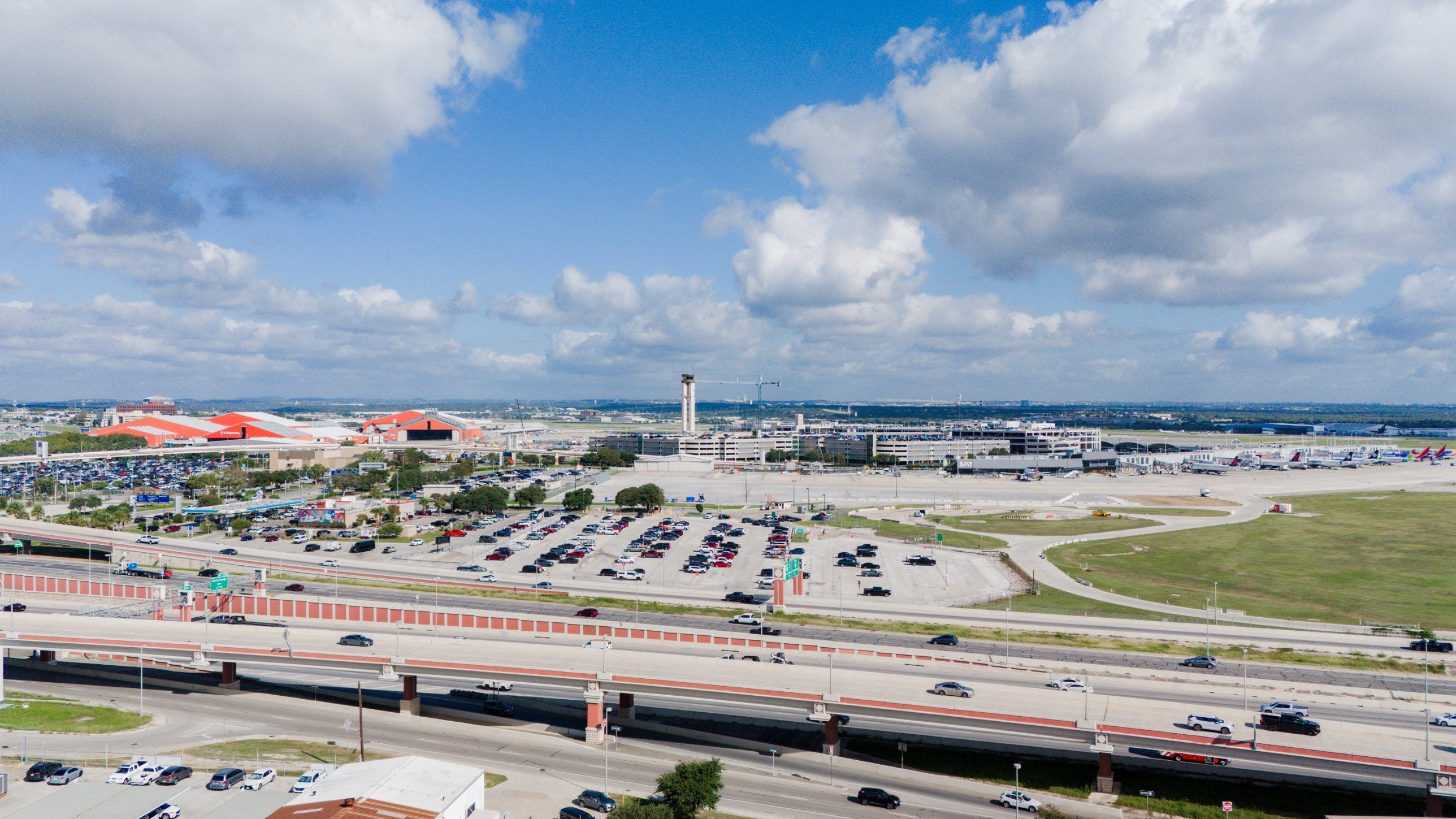
I saw a quote from Delta CEO Ed Bastian recently saying the airline wants to grow in Texas. He talked about Austin, where Delta is adding gates, basing flight attendants and launching the city’s first nonstop flight to Paris next March. Then he mentioned “looking even further down the road for me in San Antonio.”
My first thought was: Delta, don’t play with my emotions. We’ve been hurt before.
If you’ve spent time thinking about economic development in San Antonio, you know what I mean. For years, we’ve gotten excited about new routes and the possibility that a major airline might make a bigger bet on our city. We’ve made progress, but there’s still one sentence I’ve heard throughout nearly my entire career: San Antonio doesn’t have enough nonstop flights.
That’s why Bastian’s comments caught my attention. A major expansion by Delta wouldn’t just be good news for people who fly. It could be a major economic-development opportunity, and I think we have a compelling case to make for why Delta should invest here.
An airport is economic-development infrastructure
We sometimes think about airports primarily as places we go to take a vacation. But an airport is one of the most important pieces of economic-development infrastructure a city has because it connects us to the outside world.
If we want more corporate headquarters, investment and high-wage jobs, companies need to connect San Antonio to their customers, employees and other offices, domestically and internationally. A 2026 MIT-led study examining international air service and business activity found that city pairs requiring one stop had 20 percent fewer multinational subsidiaries than cities connected by nonstop flights. That doesn’t mean adding a flight automatically lands us a Fortune 500 headquarters. Talent, education, infrastructure and quality of life all matter, but connectivity belongs on that list, too.
Consider the industries we’re working so hard to grow. Our military, defense and cybersecurity communities do business with organizations in Washington, D.C. Boston is a center for biomedical research and investment; the San Francisco Bay Area is central to technology and AI; and Seattle brings together major aerospace and technology companies. To our south, Monterrey and Mexico City matter to cross-border manufacturing, trade and investment.
San Antonio already has nonstop flights to those markets. The question is whether the frequency, schedules and onward connections are as useful as they could be for the companies we have and the companies we want. That’s a much more specific pitch to Delta than simply asking for “more flights.” It means working with local employers to identify where business travelers are going and where Delta’s network could make those trips easier.
The Better Futures Institute has also written about a South Texas Triangle connecting San Antonio with Laredo, the Rio Grande Valley, Corpus Christi and northern Mexico. I’ve long believed San Antonio could become the Manhattan of that regional economy: not a copy of New York, but a place where companies establish headquarters, attract investment and connect operations across borders. We’re well positioned geographically, but geography alone won’t get us there. Better air connectivity is part of making that vision real.
We’ve been doing the work
I don’t want this to sound like an indictment of the people who have worked on our airport. Quite the opposite. San Antonio International surpassed 11 million passengers in 2024, and we’ve added domestic and international routes while continuing to recruit more service.
We’re also investing approximately $2.5 billion through ELEVATE/SAT. Its centerpiece, the new Terminal C, is planned to open in 2028 with up to 18 domestic and international gates and expanded facilities for international arrivals. Delta has been assigned four of those gates and has committed to a new Sky Club there. Last month, it announced it will grow its San Antonio to Los Angeles service to three daily flights starting in July 2027. None of that amounts to a promise of a major San Antonio hub, but it gives us a relationship to build on.
The value of that relationship could take several forms: more nonstop destinations, better flight times, more frequent service or easier connections through Delta’s domestic and international network. We still have to show the passenger demand to make those routes work for the airline. Airlines don’t add service as a favor. They add it where the numbers work, and they pull it where the numbers don’t. That’s part of why we’ve been hurt before.
More connectivity could make it easier for a CEO to visit, for a San Antonio company to reach customers and for an international business to open an office here. It could make us more competitive for investment, conventions and good-paying jobs.
The person who benefits from a new flight may never actually get on the airplane.
If better service helps convince a company to create 500 jobs in San Antonio, those employees don’t need frequent-flyer accounts to understand its economic value.
Now we have to sell it
Throughout my career, I’ve learned that no matter how good your product is, at some point, everything comes back to sales. Look at Brooks and Port San Antonio. Their teams actively pursue employers, build relationships and develop places where businesses can grow. They don’t simply build facilities and hope companies show up.
We should bring that same energy to Delta. Airport leadership, Greater:SATX, the mayor, the county judge and local employers all have a role in making the case. I know people are already doing this work; Bastian’s comments give us a reason to make the pitch even louder and more coordinated.
Show Delta our growing industries, our relationships with Mexico, the billions we’re investing in the airport and, most importantly, the business travelers who could fill its planes. Ask employers which connections would help them win customers, expand operations and hire more people. Then take that evidence to Delta and sell the opportunity.
This isn’t just about another destination on the departures board. It’s about making San Antonio a place where more people can build their futures.
So, Delta, if you’re serious about growing in Texas, we’d love to get to know you better. We think there’s an opportunity here for both of us, and we’re not afraid to make the first move. We’ve been hurt before, but we’re willing to give this relationship a chance.
Just please, don’t play with my emotions.
Citations
Delta CEO Says They’re Coming for San Antonio Next After Austin, View From The Wing, August 19, 2026.
Delta’s Texas Ambitions: Is Austin Its Next Hub?, Skift, August 19, 2026.
Delta launches Austin’s first nonstop flight to Paris, San Antonio Express-News.
Fewer Layovers, Better-Connected Airports, More Firm Growth, MIT, January 2026.
Industries, Greater:SATX.
Nonstop Destinations, San Antonio International Airport.
Powerhouse Potential, Better Futures Institute.
New Year, New Record for San Antonio International Airport, City of San Antonio, January 2025.
Terminal Development, San Antonio International Airport.
SAT settles with Southwest Airlines, giving it gates in new terminal, San Antonio Report, May 14, 2026.
Delta CEO calls out San Antonio as expansion target amid Texas growth push, KSAT, October 7, 2026.
Delta expands position as Los Angeles’ #1 airline with largest-ever schedule, premium experience and more, Delta News Hub, September 18, 2026.
Texas Comptroller: Port San Antonio Generates $20 Billion Annually for Texas Economy, Port San Antonio, September 30, 2025.
THE VOICE:
Lorenzo Gomez III

Lorenzo Gomez III is a community builder, author, and public speaker who draws from his personal and professional experiences to inspire others. A former director at Rackspace Technology, Gomez is a key player in the development of San Antonio’s downtown entrepreneurial ecosystem. During Gomez’s four years as chairman and CEO of Geekdom, San Antonio’s premier collaborative startup community, Geekdom companies raised more than $422M in funding and its startups have created 2,489 jobs. A trusted advisor to Graham Weston, co-founder of Rackspace Technology, Gomez helped shape Weston’s 80|20 Foundation, which invests in San Antonio’s future by issuing grants to public charities that attract, grow, and retain San Antonio’s future workforce and job-creating entrepreneurs. Gomez has authored four books: Cilantro Diaries, Tafolla Toro, The Rack We Built, and The Bully in Your Pocket. All four are Amazon best sellers and two are winners of the 2021 International Latino Book Awards. Lorenzo’s driving passion is his love for his hometown, San Antonio, Texas. His goal is to recreate for every San Antonian the opportunities the startup world has provided him in this city on the rise.