


In the spring of 2020, when COVID-19 arrived and nobody knew what was coming, San Antonio got used to a new routine. Day after day, then-Mayor Ron Nirenberg and then-Bexar County Judge Nelson Wolff stood side by side and briefed the community together.
The city and the county are different governments. Different budgets, different bosses and, at times, different priorities. No one signed merger papers. But for those months they merged something that mattered more: their information, their resources and their message. One podium. One voice.
I have thought about that picture a lot lately. Mergers and acquisitions in the for-profit world are hit or miss. Some create something stronger. Plenty end with two cultures fighting over one org chart and the people who did the work wondering what happened.
What I have been watching in San Antonio over the last few years feels different. It is less about combining org charts and more about setting egos aside.
Mission over logo
Higher education
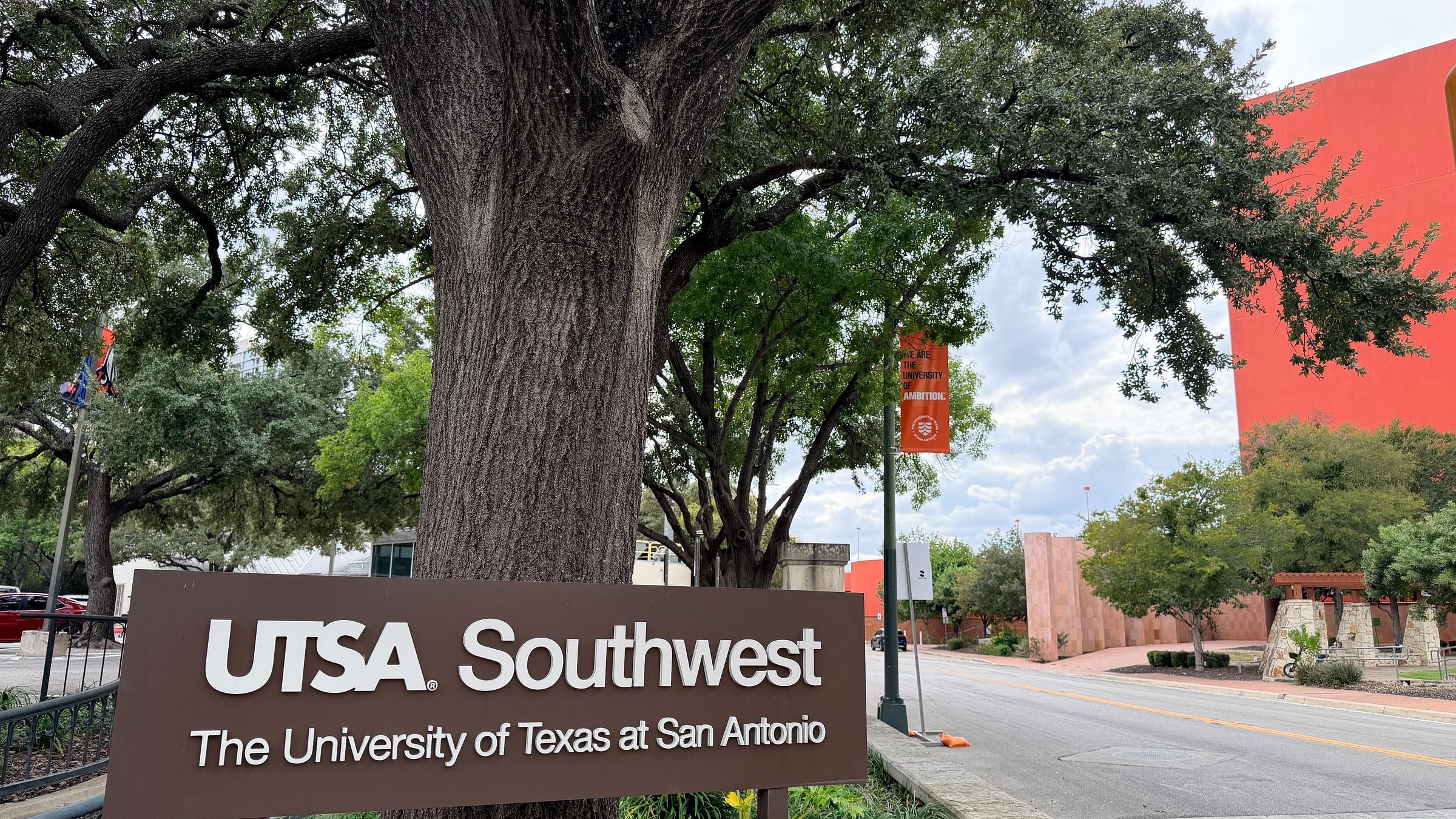
Our universities have done this twice. In July 2022, UTSA completed its integration of the Southwest School of Art. A beloved arts institution with its own history and its own campus on the river became part of a much larger university, with commitments to keep community arts classes going and preserve the historic grounds.
Then, on September 1, 2025, UTSA and UT Health San Antonio formally became one university, UT San Antonio. The combined school had about 40,000 students, 15 colleges across six campuses and more than $486 million in annual research spending, making it Texas’ third-largest public research university by that measure.
The numbers are impressive, but here is what excites me. The region’s only academic health center now sits inside the same university as its engineers, computer scientists and artists. A medical researcher and a cybersecurity student can end up on the same team without anyone crossing an institutional border. Both moves asked institutions with proud names and long histories to decide that a bigger mission mattered more than a separate identity.
News
I was an op-ed contributor to the San Antonio Report for years, back when it still carried founder Bob Rivard’s name. So I paid close attention when, on July 1, 2026, the Report and Texas Public Radio combined operations.
The Report’s 15 staffers joined TPR, creating a newsroom with more than 30 reporters, which TPR’s news director called the largest nonprofit newsroom San Antonio has ever seen. Rivard said informal conversations about coming together went back at least eight years. That is eight years of somebody being willing to keep asking the question. They even kept publishing on their own websites. Coming together does not have to mean giving up what people love about you.
Business
And now, business. In September, the Greater San Antonio Chamber of Commerce and the Metro SA Chamber announced a joint committee to explore a closer partnership. By October, they had decided to merge. The 132-year-old Greater San Antonio Chamber and the 52-year-old Metro SA Chamber will become one organization in January, representing more than 2,000 businesses.
That takes a basic humility. Somebody in those rooms had to seriously consider whether they would be better as part of something bigger, and then be willing to put the mission ahead of a title, a board seat or a logo.
Everyone’s getting squeezed
Notice the range here. None of these organizations exists to turn a profit. The newsrooms and the chambers are nonprofits, and the university is a public institution. But they serve vastly different worlds: higher education, news and business, each with its own rules, customers and measures of success. That tells me this is not a trick that only works in one sector. It is a leadership choice.
The urge to do your own thing runs deep in me, and sometimes it is exactly right. In 2015, when new city rules pushed Uber and Lyft out of San Antonio, nobody was speaking for the tech community at City Hall. There were chambers, but nothing built for our industry, so a group of us started Tech Bloc. By that fall, rideshare was back.
Something was missing, so we built it. That has become my test. When something is missing, start something. When the work overlaps, ask whether you belong together.
Most days, San Antonio’s problem is not that something is missing. It is that we have a lot of somethings. And we are going to need to ask that question more often. Everybody is getting squeezed right now. Nonprofits raising money. Donors stretched thin. The city’s budget. The county’s budget. When money gets tight, the natural instinct is to retreat to our corners, protect our turf and hide our marbles. The leaders I am describing did the opposite.
This is not a silver bullet. Collaboration will not fix a budget gap on its own, and not every partnership should become a merger. A healthy city still needs independent voices. The question is simple: will the people being served get something better? But I love living in a city where serious people are willing to put every option on the table, and I want to encourage more of us to do the same.
San Antonio has always known how to start things. I am proud we are learning how to bring them together.
Citations
WATCH NOW: Coronavirus update from SA Mayor Nirenberg, Bexar County Judge Wolff 3/27/20, KSAT, March 27, 2020.
Coronavirus update San Antonio, June 4: Leaders move daily briefings to Tuesdays and Thursdays, KSAT, June 4, 2020.
UTSA completes integration with Southwest School of Art, UTSA, July 5, 2022.
UT San Antonio merger complete, becomes Texas’ third-largest public research university, KSAT, September 1, 2025.
TPR and San Antonio Report join forces to make largest nonprofit newsroom San Antonio has ever seen, Texas Public Radio, July 3, 2026.
2 San Antonio chambers of commerce announce plan for closer collaboration, Texas Public Radio, September 8, 2026.
Two San Antonio chambers of commerce merge to form a unified business voice, KSAT, October 6, 2026.
TechBloc looks to give technology a voice and a seat at the table in San Antonio, Texas Public Radio, May 21, 2015.
Uber returns to San Antonio, Texas Public Radio, October 13, 2015.
THE VOICE:
Lorenzo Gomez III

Lorenzo Gomez III is a community builder, author, and public speaker who draws from his personal and professional experiences to inspire others. A former director at Rackspace Technology, Gomez is a key player in the development of San Antonio’s downtown entrepreneurial ecosystem. During Gomez’s four years as chairman and CEO of Geekdom, San Antonio’s premier collaborative startup community, Geekdom companies raised more than $422M in funding and its startups have created 2,489 jobs. A trusted advisor to Graham Weston, co-founder of Rackspace Technology, Gomez helped shape Weston’s 80|20 Foundation, which invests in San Antonio’s future by issuing grants to public charities that attract, grow, and retain San Antonio’s future workforce and job-creating entrepreneurs. Gomez has authored four books: Cilantro Diaries, Tafolla Toro, The Rack We Built, and The Bully in Your Pocket. All four are Amazon best sellers and two are winners of the 2021 International Latino Book Awards. Lorenzo’s driving passion is his love for his hometown, San Antonio, Texas. His goal is to recreate for every San Antonian the opportunities the startup world has provided him in this city on the rise.