


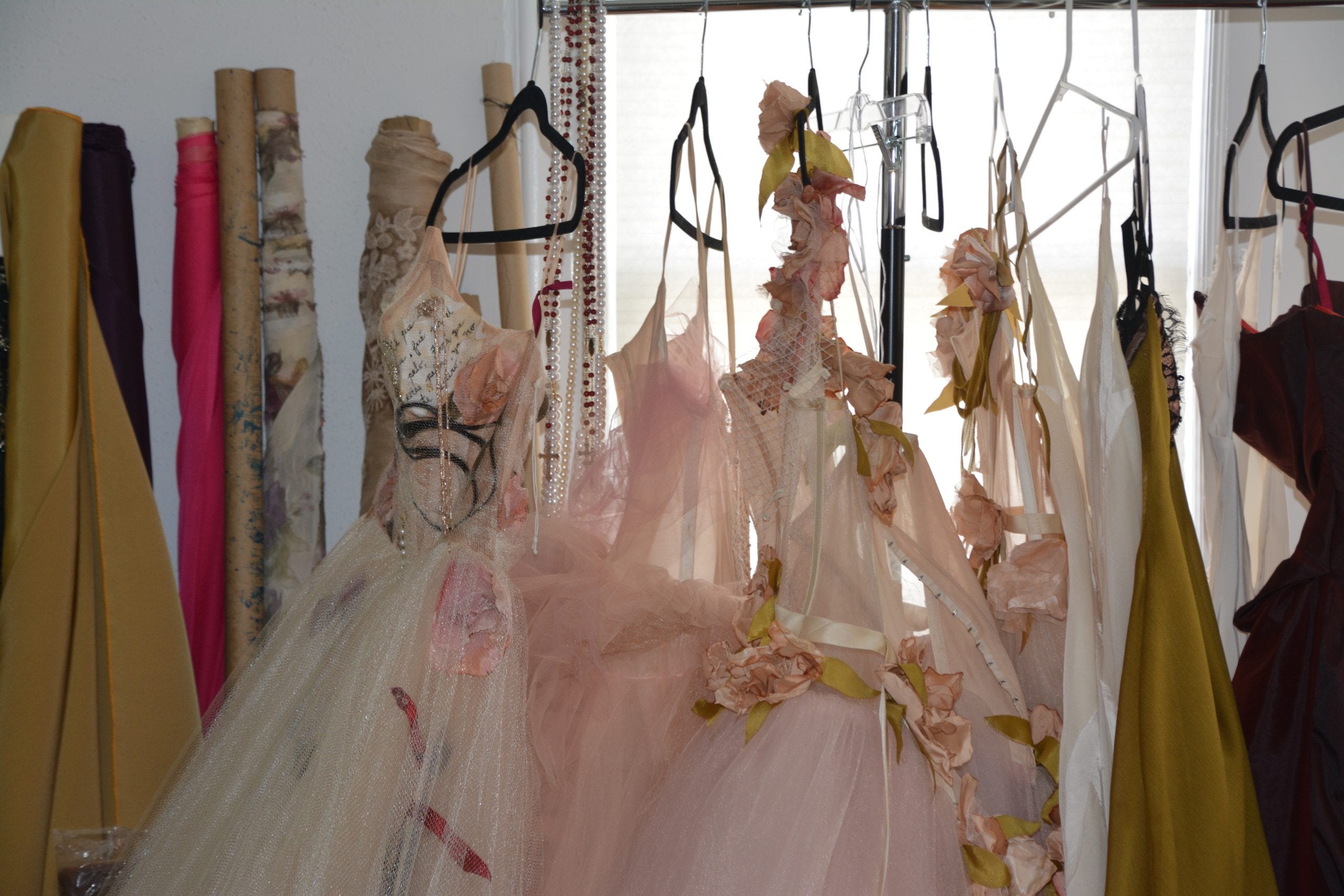
San Antonio designer Nico Pérez isn’t just building a fashion brand. He’s giving flowers to the women history forgot.
The heart of Nico’s work is telling the stories of those who didn’t get the chance to pursue their dreams.
Born and raised in South Texas, Nico Pérez grew up shaped by landscape and by women. He ran around with his siblings playing dress-up as superheroes, getting clothes caught on mesquite thorns. He watched his sister choose her Quinceañera dress from a shop chair. He learned early about the balance between deterioration and play, and that tension has never left him.
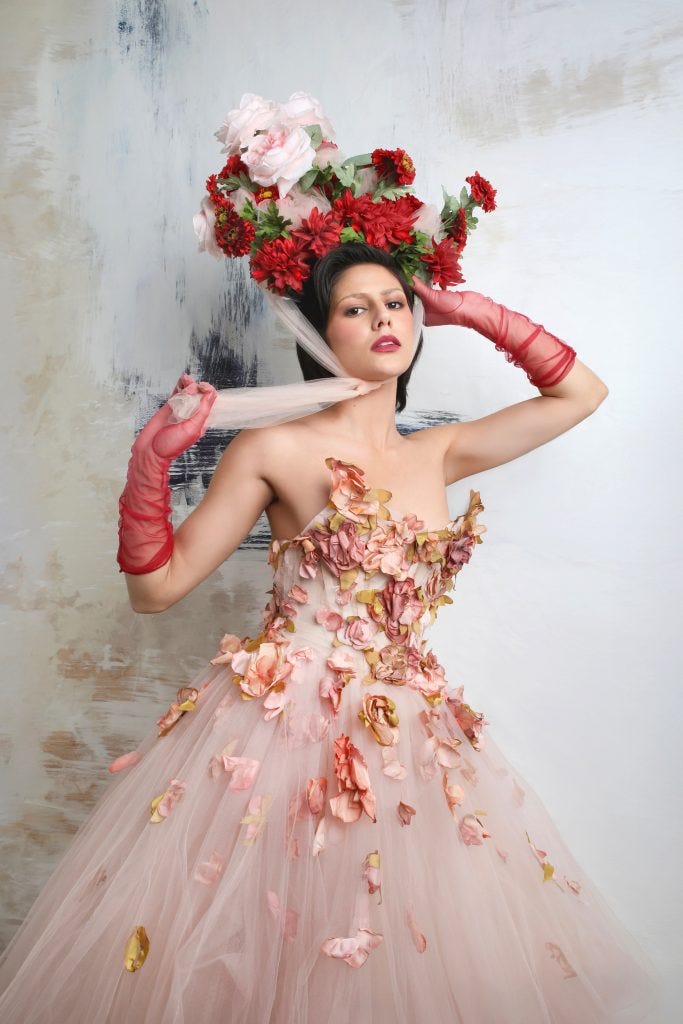
“I’m on a mission to make this fun and to treat this as an art form versus a design form,” he says. Fashion design has rules, of course. Grainlines. Structure. Proper dressmaking technique. But once you learn the rules, you can break them with intention. For Nico, it’s always been about the joy underneath the craft. “If I start having fun with fashion, and other people can see that, then the work will resonate with them too.”
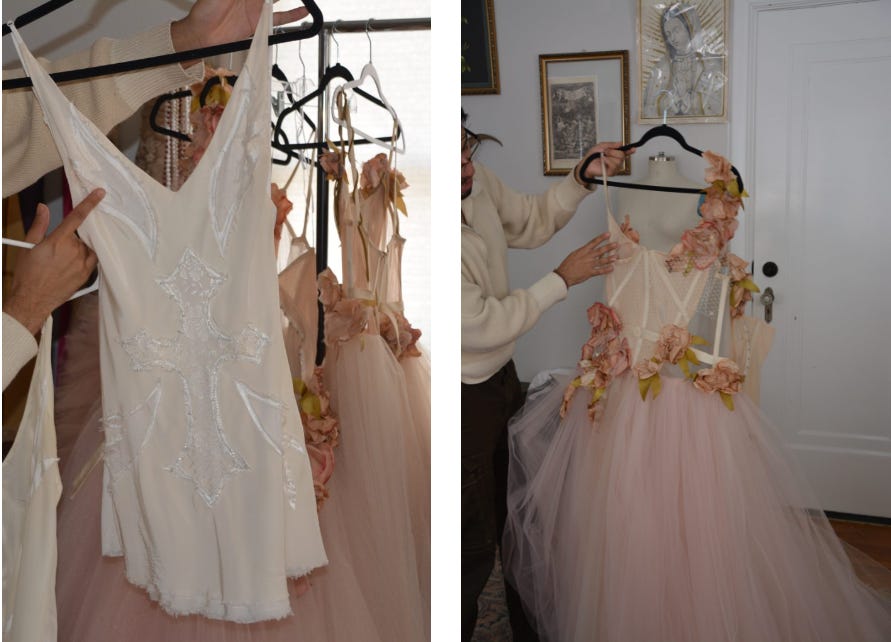
He’s been building toward this for a decade. As a self-taught designer, he learned through his first brand, Nico, what it means to evolve through experience. “I think with Nico, to quote the Bible, ‘when I was a child, I acted like a child and spoke like a child.’ There were design choices that were horrible. There were financial decisions that were horrible. There were mistakes made as an artist, as a person, and it taught me a lot of humility, but also a lot of celebration.” He credits fellow San Antonio designer Angelina Mata as a formative mentor, someone who gave him, as he puts it, “the most stern of hands, but did it with utmost love and respect. Every single win I have, she’s clapping. She’s there, championing.”
“I’m on a mission to make this fun and to treat this as an art form versus a design form.”
–Nico Peréz, Fashion Designer
Early on, working backstage at pageants alongside trans women, he found one of his most formative educations in aesthetics and life. Watching them get ready, he saw the way intensity and competition lived alongside softness and rawness. He cites one of his close collaborators and bestfriends, Vivienne, as a constant muse. “Whenever somebody like her wears my clothes, it’s a much bigger picture than just a woman in a gown. These women are carrying everything on their shoulders and are doing it gracefully, because what’s the other choice?”
If the past ten years was his schooling, then Don Nicó is his graduation.
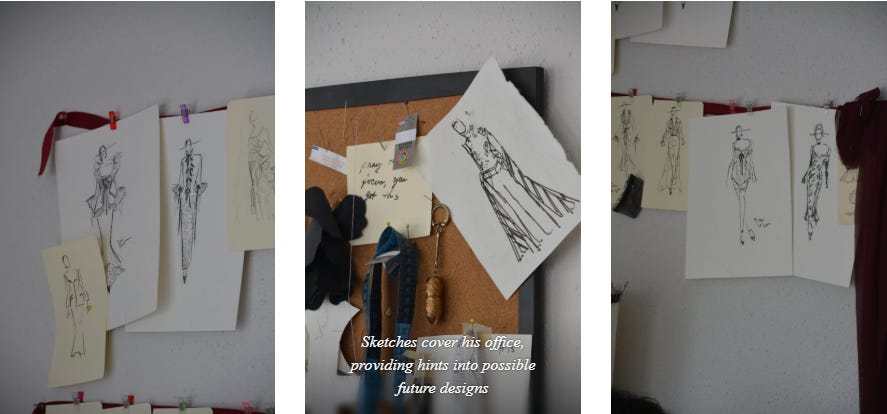
The debut collection was conceived from a specific question: what happens to ambition that never finds its outlet? “Whenever you have ambitions, but nothing to do with it, you even die with that.” He thought about seamstresses who never became designers. Potters who never became artists. Cooks who never became chefs. Women who were just trying to survive.
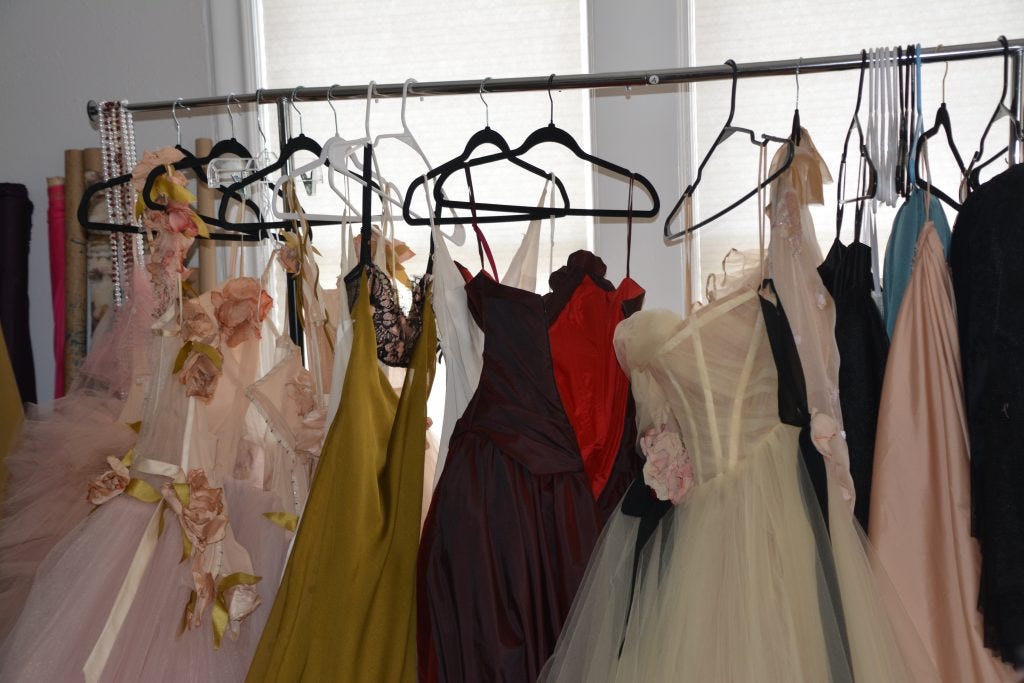
Then he found them: brown women who wrestled in the 1950s. “I did more research and these women, because of either race or lack of resources, didn’t have the ability to get costumes made. So they would go out and fight in their underwear.” That image unlocked everything. What would a Don Nicó version of that look like? Underpinnings. Corsets. Petticoats. Bullet bras. The garments worn beneath a couture gown, now brought into the light.
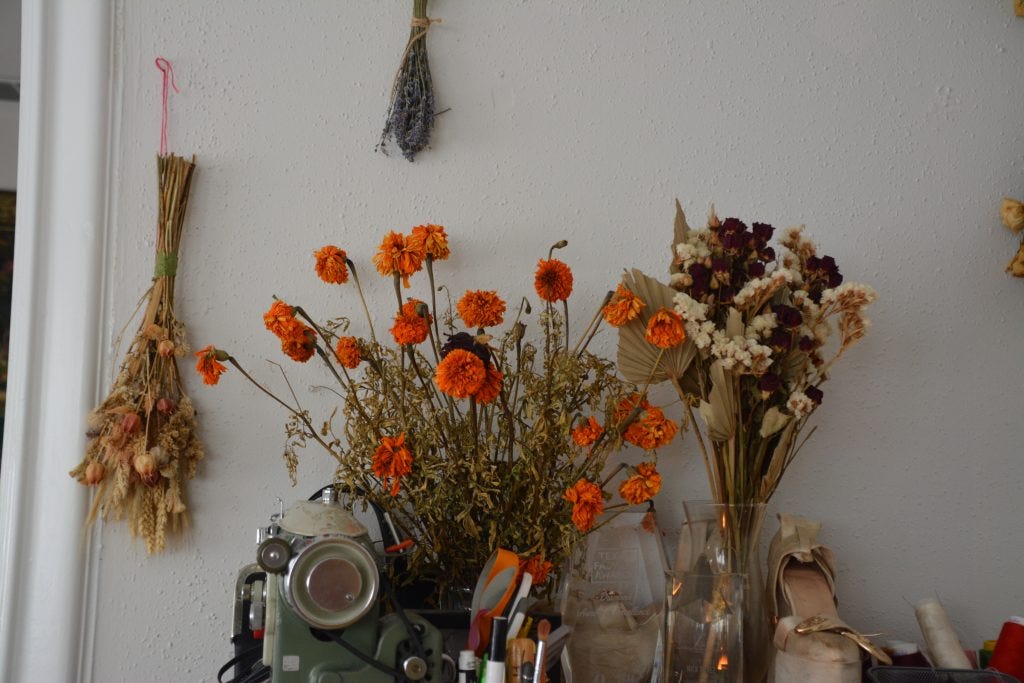
Flowers are a house code for Don Nicó, specifically dying ones, and they trace back to his grandmother’s altar. To flowers received in moments of loss, love, celebration. “It was my way of giving these fighters their flowers. It’s always going to be the life force of the flowers, honoring the women who came before.”
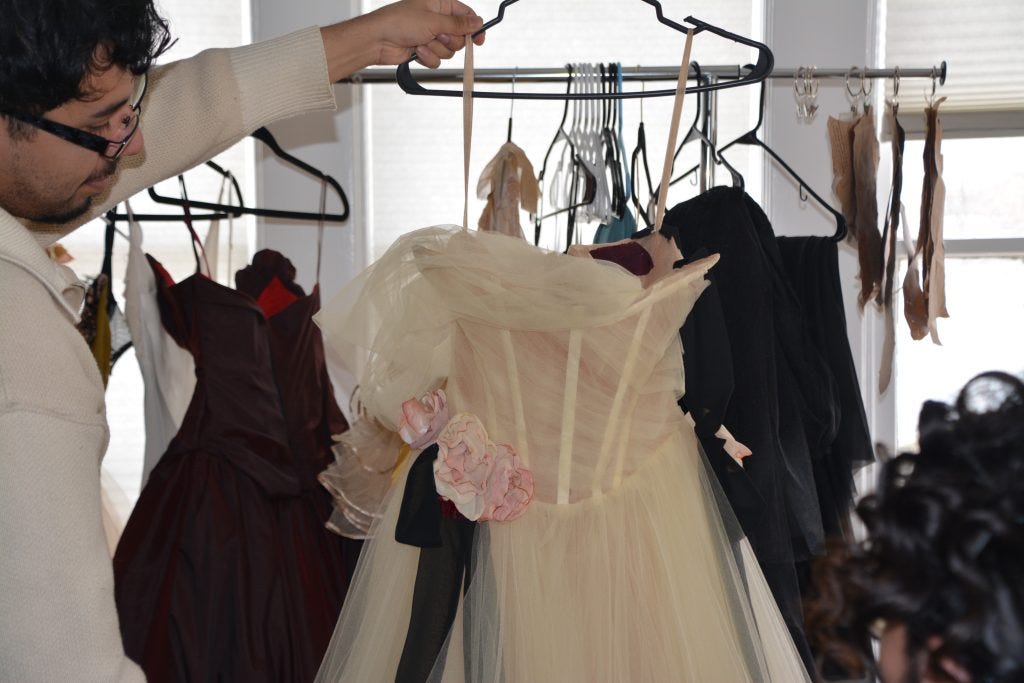
That spirit fed the show’s styling too. Models in wig caps. Ripped pantyhose. Missing fingernails. Makeup simulating bloody, busted lips. “I want them to look like they just got out of something, but they walked away from it. And I think that’s something we do not celebrate enough: people who go through hard things and get to walk away, because not everybody does.”
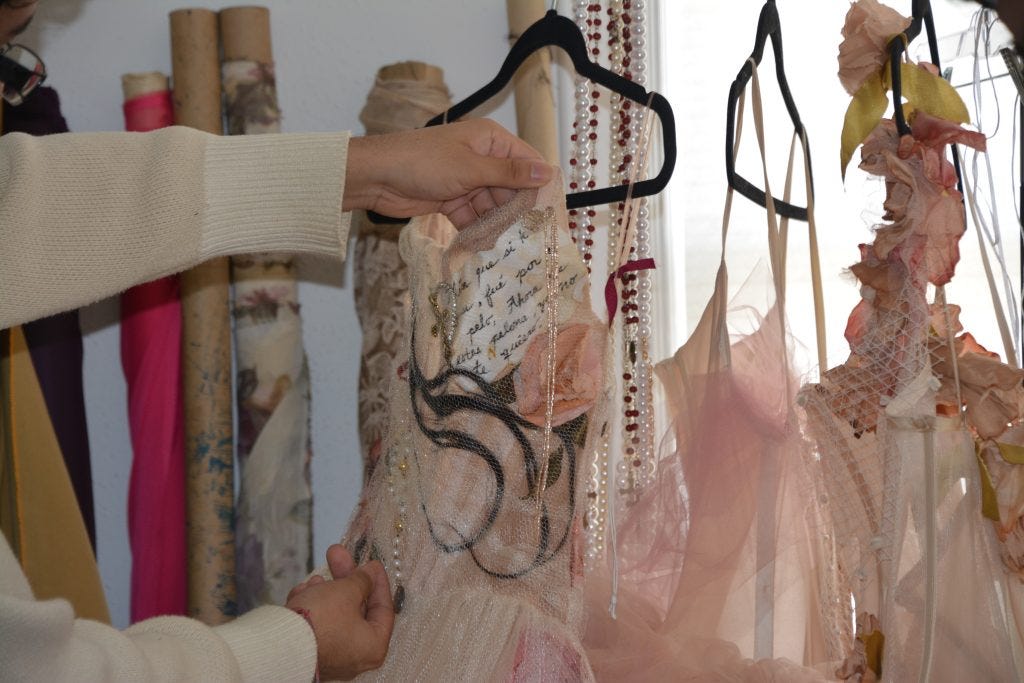
One highlight of the collection is the Shadowbox Dress, a gown that honors the woman left heartbroken from fighting for love. Hair clippings, love letters, a rosary, flowers she once received, all stitched into the bodice, with a thin layer of tulle holding what remains together. He traces the reference to a Frida Kahlo painting in which she cuts off her hair. “This is for the heartbroken woman. What is she left with? She’s left with the memories of what was her at one point.”
“Women have given me so much. I can only give everything back. One thousand percent.”
–Nico Peréz, Fashion Designer
A second collection arrives in the Fall. “It’s not like an extension of the first, per se. It’s more like same world, different breath.”
The long game is already in focus. Nico is thinking about what the Don Nicó world looks like at full scale: ready-to-wear, a boutique, menswear. He describes the sensory texture of what he’s building with clarity and appetite. “Everything should smell like burning leaves, rosewater, and Palo Santo. You should be able to wear the shoe that has frayed satin around it with little ribbons. You should have the pearls that are a little messed up, and the hair brooches that go with them. I have a complete vision for what I want.” He’s self-funded, building it piece by piece. As for the menswear question, he doesn’t overthink it: “Be a man and wear the dress.” The Don Nicó customer is for anyone drawn to character dressing, to camp, to the power of embracing both sides of themselves without apology.
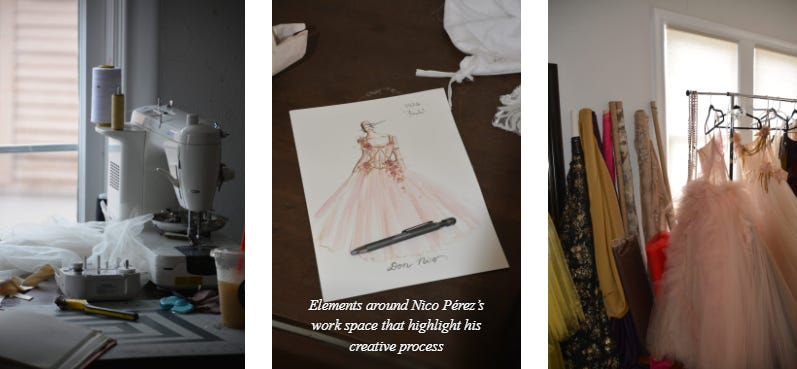
Women are not just the muse here. They’re the engine. “I make a living off of the ambitions of what women want to wear. So therefore, I should hire women, give my money to women, hire women as models, hair stylists, makeup artists, seamstresses. Women have given me so much. I can only give everything back. One thousand percent.” Every single dress in Don Nicó has had the touch and perspective of a woman. They will always be, he says, his biggest collaborators.
So why San Antonio? The pull isn’t sentimental. It’s structural. “There’s something about the DNA of San Antonio. Being predominantly Brown and Latin populated, you can’t help but run into the culture.” It’s in the art, the landscape, the language, the architecture. “I always designed pieces understanding that one day I want my store to look like one of the missions.” South and Central Texas is embedded in every garment, from the aesthetic choices down to the imagery of childhood dresses snagged on mesquite thorns. “I think of those brown people who came before me and that were like me, and their lives.”
This Spring, Don Nicó launched a collaborative installation at Blue Star with Ray Mendoza of Ray’s Floral Boutique called Florería. Blue Star invited both to create something for First Friday: Nico’s gowns alongside a massive floral installation winding through the space. Color was central to the curation, building a dark romantic mood. They made a deliberate call: no dead flowers at the start. “It needs to feel like something that can die over time.” Over the course of the month-long exhibition, visitors could watch the flowers wilt and fade alongside gowns that, at first glance, read as romantic, but on closer inspection revealed tears, burns, and reconstruction.
“As brown queer business owners in South Texas, we felt like it should be a celebration of those worlds. Of growth and deterioration. Craft and identity.”
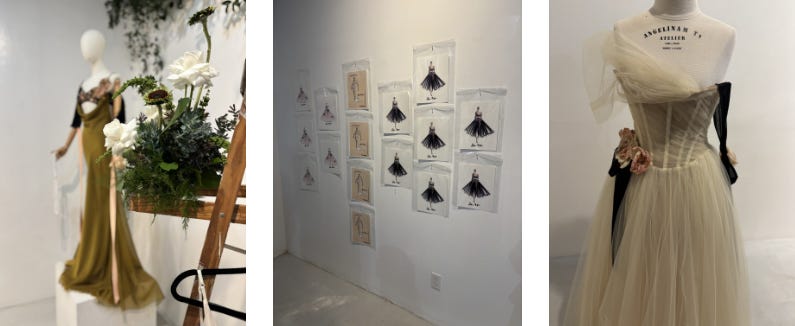
On whether fashion is art, Nico is careful. “No. I think designing is art, but I don’t think fashion is art. Fashion can be art, but it takes an artist to do it. I want to be an artist who does fashion. Is fashion art? No. Can it be? Yes. I really want to be one of the people who can make it art.”
He’s already most of the way there.
THE VOICE:
Patrick J. Martinez
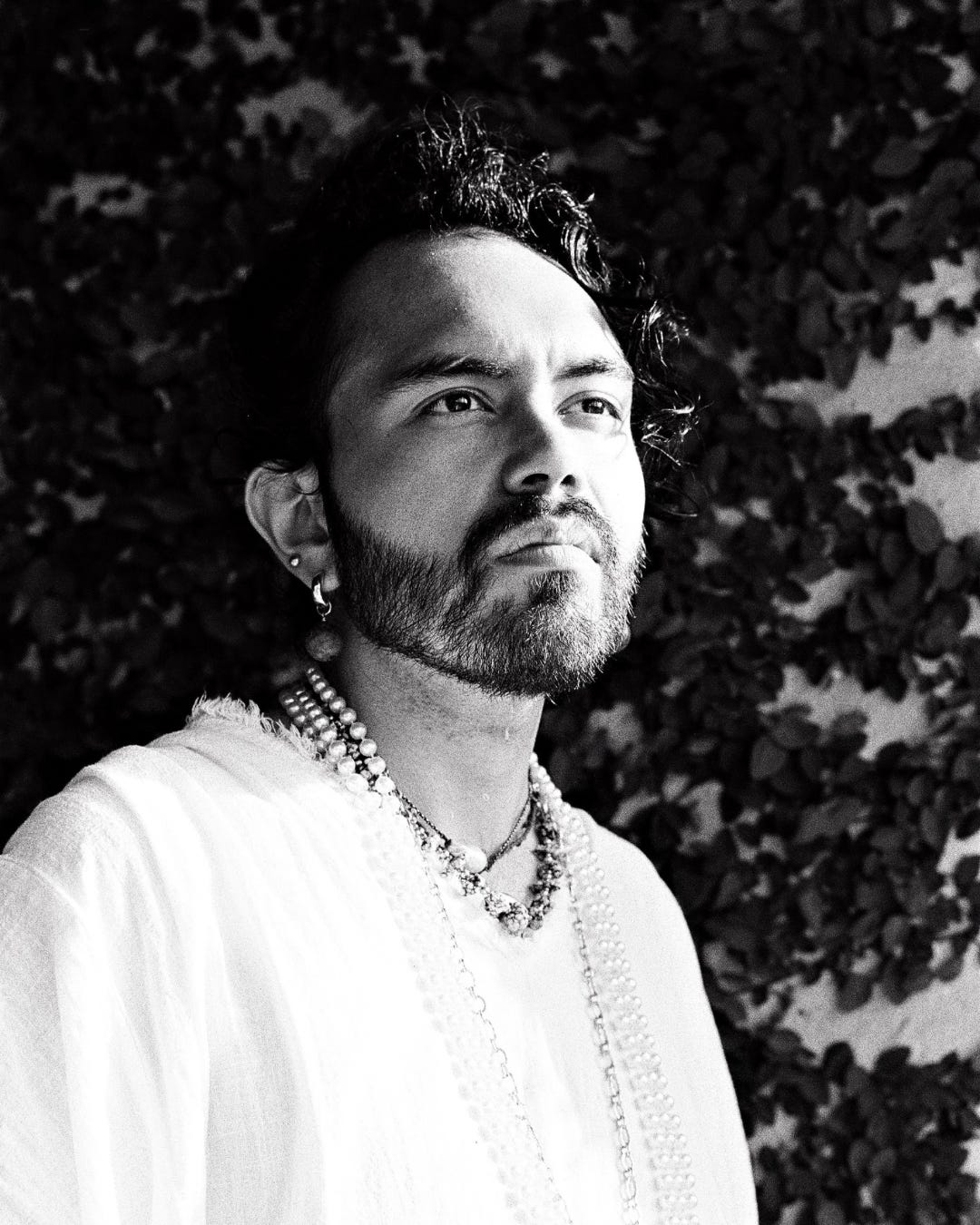
Patrick J. Martinez is a San Antonio–based stylist and creative collaborator who styled all three inaugural fashion shoots for Voice of San Antonio magazine. A 2017 graduate of the Fashion Design program at the University of the Incarnate Word, they approach style as an act of freedom, blending tailoring, texture, and unexpected contrasts to challenge convention. Known for breaking traditional fashion rules and expressing gender fluidity through dress, Patrick brings a bold, intuitive perspective to storytelling. They serve as Assistant Manager at Niche at Pearl and work as a freelance stylist.